



Navigating AI's Dual Impact on HR: Insights from South African Research
- 02 December 2025
- Organisational Development
- Academy for Organisational Change
Navigating AI's Dual Impact on HR: Insights from South African Research
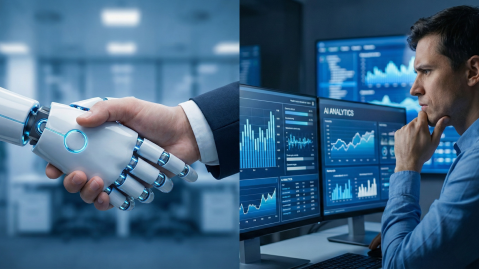
The integration of artificial intelligence into human resources is creating a fundamental shift in how we think about workforce management—one that goes beyond technology adoption to address deep psychological and organizational transformation.
Recent research from Nelson Mandela University examining South African HR leaders' perspectives reveals organizations are experiencing a complex transition as AI technologies become embedded in HR processes. The findings illuminate a critical tension that many organizations face today.
The Opportunity-Anxiety Paradox
The study, which surveyed senior HR managers from leading manufacturing organizations, found that AI and robotic process automation (RPA) are viewed as essential for remaining globally competitive and streamlining business processes. AI technologies are successfully automating transactional tasks—from payroll processing to candidate screening—creating unprecedented capacity for strategic work.
Yet alongside this enthusiasm runs a current of concern. HR leaders express genuine anxiety about workforce displacement and the widening skills gap. This isn't merely resistance to change; it's a rational response to the fundamental restructuring of work itself.
From Administrators to Strategic Architects
The research points to a critical evolution in the HR function. HR managers emphasized the need to empower the workforce, identify ideal employee traits for AI integration, and effectively manage these technologies within organizations. This requires HR professionals to transition from process administrators to strategic workforce architects who can:
- Design human-AI collaboration models
- Build internal capability development programs
- Navigate the ethical implications of algorithmic decision-making
- Create pathways for continuous workforce adaptation
The Human Element in Digital Transformation
Perhaps the most important insight is that successful AI implementation hinges not on the sophistication of the technology, but on how effectively we manage the human transition. Organizations must address legitimate workforce concerns while building the capabilities needed for a digitally-augmented future.
This means creating comprehensive upskilling initiatives before skills gaps become chasms. It means transparent communication about how AI will augment rather than replace human capabilities. Most importantly, it means ensuring HR professionals themselves are equipped to lead this transformation.
Moving Forward: A Balanced Approach
As we navigate this transition, the key is maintaining equilibrium between technological advancement and human development. The organizations that will thrive are those that view AI not as a replacement for human judgment but as a tool that amplifies human potential.
The shift from "doing the work" to "designing and overseeing intelligent systems" represents both a challenge and an opportunity. For HR professionals ready to embrace this evolution, the future offers the chance to focus on what humans do best: creative problem-solving, empathetic leadership, and strategic thinking.
Source: Poisat, P., et al. (2024). Human resource managers' perceptions on the impact of AI on the South African workforce. SA Journal of Human Resource Management. (https://sajhrm.co.za/index.php/sajhrm/article/view/2593https://sajhrm.co.za/index.php/sajhrm/article/view/2593)
Ready to Lead the Future of HR? Equip yourself with the strategic skills to navigate the 4IR. The Academy for Organisational Change (AOC) offers the accredited Higher Certificate in Organisation Development and Change to help you lead this transition.